Use of umbilical cord cells shown to safely cut relapses in NMOSD in trial
Data suggest treatment may help rebalance immune system in patients
Written by |
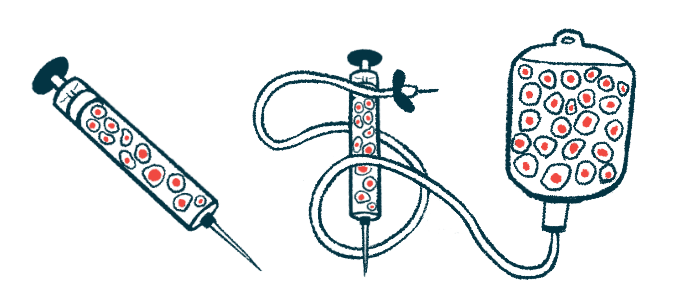




Infusions of stem cells derived from umbilical cords proved safe for people with neuromyelitis optica spectrum disorder (NMOSD) and look to be a promising new therapy for the autoimmune disease, according to data from an early clinical trial conducted in China.
In the trial, the two-year treatment, which consisted of four intravenous, or into-the-vein, infusions of stem cells — called human umbilical cord-derived mesenchymal stromal cells, or hUC-MSCs — was associated with a significant reduction in disease relapses, disability, and brain lesions, data showed.
Shifts in immune cell populations and signaling molecules suggested the use of umbilical cord cells may help rebalance the immune system “toward a more regulated state,” the researchers wrote.
Overall, the team wrote, “this trial indicates that intravenous hUC-MSC administration is safe and shows potential efficacy in treating NMOSD.”
The findings were detailed in a study titled “Human umbilical cord mesenchymal stromal cells therapy for neuromyelitis optica spectrum disorder: a phase 1/2a trial,” which was published in the journal Cell Death & Differentiation.

In NMOSD, abnormal immune attacks cause inflammation and damage mainly to the spinal cord and optic nerves, which carry visual signals between the eyes and the brain. This results in symptoms such as vision and movement problems.
Umbilical cord cells easy to obtain, grow well in lab
The disease is typically marked by relapses, which are periods of new or worsening symptoms interspersed with periods of remission with reduced or no symptoms. Each relapse can lead to new neurological damage that accumulates over time, often leading to greater disability.
Most available treatments for NMSOD broadly suppress immune activity to treat or prevent relapses. However, these medications do not repair existing damage and may increase the risk of infections. Moreover, some patients may still experience breakthrough relapses while on them.
Mesenchymal stromal cells are being explored as a potential alternative because of their immunomodulatory, anti-inflammatory, tissue-repairing, and neuroprotective properties. Critically, their immunomodulatory properties are “context-dependent” and do not “cause broad immunosuppression, potentially mitigating infection risks,” the researchers wrote.
Among the different sources, hUC-MSCs are easy to obtain, grow well in the lab, and are less likely to trigger immune rejection, allowing them to be used from donors without close genetic matching. However, their use in NMOSD has been limited to date, the researchers noted.
To evaluate the safety and preliminary effectiveness of hUC-MSCs infusions in NMSOD, a team of researchers conducted a Phase 1/2a trial (ChiCTR-INR-16008037) at a single Chinese hospital.
The study enrolled 31 people with NMOSD between May 2020 and December 2021. Most participants were women (83%), with a mean age of 41.2 and a mean disease duration of 6.8 years.
The participants were assigned to one of three consecutive dose groups — low (1 million cells/kg), medium (2 million cells/kg), or high (5 million cells/kg) — and were scheduled to receive four intravenous infusions over 24 months, or a two-year span. Follow-up assessments were scheduled to occur every three months.
Overall, 22 participants completed all four planned infusions, while five received only three because of disruptions caused by a surge in COVID-19 cases. Complete two-year follow-up data were available for 26 participants.
Among the 31 participants involved in the safety analysis, the treatment was generally well tolerated across all dose groups. Most adverse events were mild (83.5%), and the most common was urinary tract infection (73%). All 10 reported serious adverse events were not considered related or likely related to the therapy.

Relapse-free time more than doubled for patients
Efficacy analyses, which involved 30 participants, showed the therapy was associated with reduced disease activity.
The time participants remained free from relapse more than doubled, from a median of 305 days, or about 10 months, before treatment to 760 days, or approximately two years, after treatment. Statistically significant extensions of relapse-free time were observed in the medium- and high-dose groups.
The number of relapses experienced over a year decreased significantly across all dose groups, dropping from a median of one relapse in the two years prior to treatment to none in the two years after treatment start, the data showed.
Disability, as assessed with the validated Expanded Disability Status Scale (EDSS), showed an overall trend toward lessening over two years, driven by significant score reductions in the low- and medium-dose groups.
Improvements in motor and sensory function were also observed across all dose groups, while gains in visual function were seen in the medium-dose group. Still, none of these changes reached statistical significance.
Brain scans also showed a significant reduction in the total volume of brain lesions, particularly in the medium-dose group, according to the researchers.
Further analysis after treatment showed participants had fewer inflammatory immune cells and more regulatory T-cells that help keep immune responses in check, along with higher levels of anti-inflammatory molecules. Some of these changes were particularly evident in the medium- and high-dose groups.
These findings suggested the therapy may help rebalance the immune system toward a more regulated state, the team noted.
“Intravenous infusion of hUC-MSCs for treating NMOSD, even at a high dosage, is safe and well-tolerated,” the researchers wrote, adding that the preliminary findings suggest the “medium dose might be the best possible compromise between safety and effectiveness.”
Still, the team noted that larger studies are needed to “validate the effectiveness and safety of medium dose hUC-MSC therapy for NMOSD.”