
Pain, fatigue in NMOSD not captured by standard physical disability scores
Patient-reported outcomes may be better for tracking symptoms, researchers say
Written by |
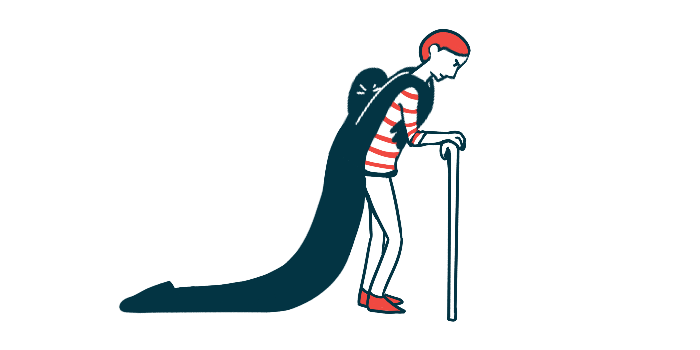




People with neuromyelitis optica spectrum disorder (NMOSD) often experience severe fatigue, pain, anxiety, and depression that are not fully captured by standard physical disability tools used in the clinic, a study found.
According to the researchers, “disability scores were weakly associated with symptom burden” on the Expanded Disability Status Scale (EDSS), the measure most commonly used, despite the “high burden of pain, fatigue and mood symptoms … observed in this NMOSD [patient group].”
Noting that the EDSS “has only been validated for multiple sclerosis (MS),” the team wrote that it “may not capture important aspects of the patient experience in NMOSD.”
Altogether, the researchers say, these findings suggest that patient-reported outcomes — a measure known as PROs — should be integrated into NMOSD research protocols and clinical care.
Titled “Patient reported outcomes in NMOSD reflect a high disease burden and do not correlate with the EDSS,” the study was published in the journal Multiple Sclerosis and Related Disorders by a team of researchers in Canada.

In NMOSD, self-reactive antibodies attack cells that support the nervous system, causing inflammation in the spinal cord and the optic nerve, which connects the eyes to the brain. The condition typically results in symptoms such as muscle weakness and vision problems.
The symptoms of NMOSD, how it progresses, and how patients respond to treatment are usually monitored using clinical tools, often at each patient visit. While originally developed for MS, a related condition, the EDSS is widely used by neurologists to assess the level of physical disability in NMOSD.
The researchers suggested, however, that “the EDSS does not adequately capture distinct symptom patterns in NMOSD that significantly affect quality of life (QoL).”
Assessing how well the EDSS works to reflect NMOSD symptoms
In this study, the researchers sought to determine whether the EDSS truly reflects the daily experience of living with NMOSD, particularly in terms of fatigue, pain, anxiety, and depression. The team drew on data from 69 adults with NMOSD, with a median age of 50, who were part of a larger, multicenter Canadian study called CANOPTICS.
Each had tested positive for antibodies against aquaporin-4, the most common NMOSD-driving antibody, and most (83%) were women. All completed four questionnaires in which they reported their own symptoms.
Pain was measured using the short-form McGill Pain Questionnaire (MPQ), while fatigue was assessed with the Modified Fatigue Impact Scale (MFIS). The MFIS looks at how fatigue affects physical, mental, and social activities. Anxiety was measured using the Generalized Anxiety Disorder seven-item scale (GAD-7), and depression with the Beck Depression Inventory (BDI).
Patients had a median MPQ score of seven, indicating mild to moderate pain. However, 1 in every 5 individuals (20%) met clinical thresholds for severe pain, according to the researchers.
The median MFIS score was 39, above the threshold of 38 that indicates a significant impact of fatigue. The researchers noted that slightly more than half of the adults in the study reported moderate to severe fatigue.
These distributions highlight that a significant proportion of individuals with NMOSD experience symptoms that exceed commonly accepted thresholds for clinical concern.
Median GAD-7 and BDI scores fell within the mild range, with some patients reporting moderate to severe symptoms of anxiety (26%) or depression (20%).
“These distributions highlight that a significant proportion of individuals with NMOSD experience symptoms that exceed commonly accepted thresholds for clinical concern,” the researchers wrote.

Greater fatigue linked to being female in analysis
Women tended to report more severe pain, fatigue, and depression than men, but these differences did not reach statistical significance, meaning they could be due to chance.
In the clinic, doctors assessed patients’ disability using the EDSS. The median score was three, indicating moderate disability in one functional system, or mild disability in three or four functional systems, while remaining able to walk.
Statistical analyses showed moderate to strong associations between the PROs. Fatigue was associated with pain, depression, and anxiety, while depression and anxiety were correlated. “However, the EDSS was poorly correlated with all PROs evaluated,” the team wrote.
Additional analysis adjusted for EDSS showed that being a woman was significantly associated with greater fatigue. No other links were identified.
“These findings underscore the relevance of PROs in NMOSD in capturing symptoms that are not easily predicted by the neurological exam or the patient’s demographic profile,” the researchers concluded. “PROs may assist both clinicians and researchers in evaluating the full spectrum of disability related to NMOSD.”


Leave a comment
Fill in the required fields to post. Your email address will not be published.